Downspout Repair in Wyoming, MI
Where the Water Actually Goes
A gutter system is only as good as where it puts the water. Downspouts are the part homeowners look at least and the part that fails most quietly, because a blocked downspout does not announce itself until a run overflows or a basement takes water. The most common failure is at the outlet, the opening where the trough drops into the pipe, which is a narrow point that catches shingle grit and seed heads and gradually closes. Behind it, the elbows at the top and bottom of the run are the next likeliest blockage, since debris that makes it past the outlet stalls at the first turn. Many Wyoming lots have buried drain tile carrying discharge away from the house, and those lines are the least visible part of the whole system. Tile that was installed decades ago collapses, separates at joints, or fills with roots, and when it does the water backs up the downspout and out at the elbow, usually right against the foundation. Homes on the flatter parts of the city are especially unforgiving about this, because there is no grade to carry surface water away once it arrives. We test discharge with water rather than assuming, follow the line to where it surfaces, and tell you plainly whether the fix is a clearing, a section replacement, or a redirect above ground.
Downspout work starts by running water through the system and watching what comes out the far end and what does not. You get the blockage located rather than guessed at, the discharge point confirmed, and a recommendation on whether the run needs an additional downspout. Runs longer than about forty feet with a single outlet overflow in heavy rain regardless of how clean they are, and adding an outlet solves what more cleaning cannot. Where a buried line has failed, we will tell you if a surface extension does the same job for far less.

What's Included in our Downspout Repair & Drain Tile Drainage service?
Outlet and Blockage Clearing
Most downspout failures start at the outlet where the trough meets the pipe.
Buried Drain Tile
Underground lines collapse or root-block and stop carrying water away.
Downspout Installation
Additional outlets relieve runs that overflow because water travels too far.
Proudly serving Wyoming, Cutlerville, Kentwood, Byron Center, Grandville and Jenison for years.
Comprehensive Gutter Services Services in Wyoming
Tailored to Your Needs
Ten services, and the first three cover most of the calls we get: cleaning, installation and repair. The rest exist because a clogged downspout, a rotted fascia run and a February ice dam are genuinely different jobs, with different tools, different access and different pricing.

A full clean removes debris, flushes every run, and confirms each downspout discharges freely.

Installation sizes the trough and outlets to the roof area actually draining into them.

Repair addresses the cause of the failure rather than resealing the symptom.

Guards reduce cleaning frequency; they do not eliminate maintenance on a treed lot.
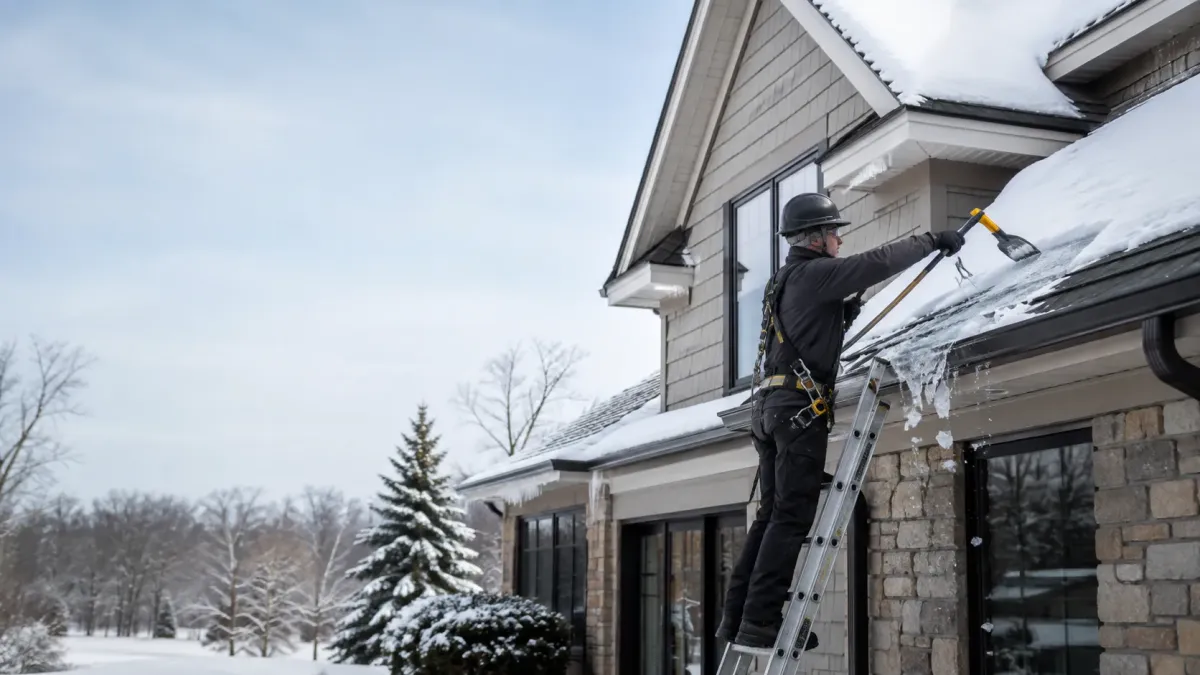
Removal clears the ice ridge and reopens drainage before meltwater backs under shingles.

Fascia repair restores the structural board that gutter hangers actually fasten into.

Downspout work moves roof water past the foundation instead of beside it.

Seamless trough is formed to the exact run length, removing the joints that leak first.

Replacement is the right call once repair costs start recurring every season.
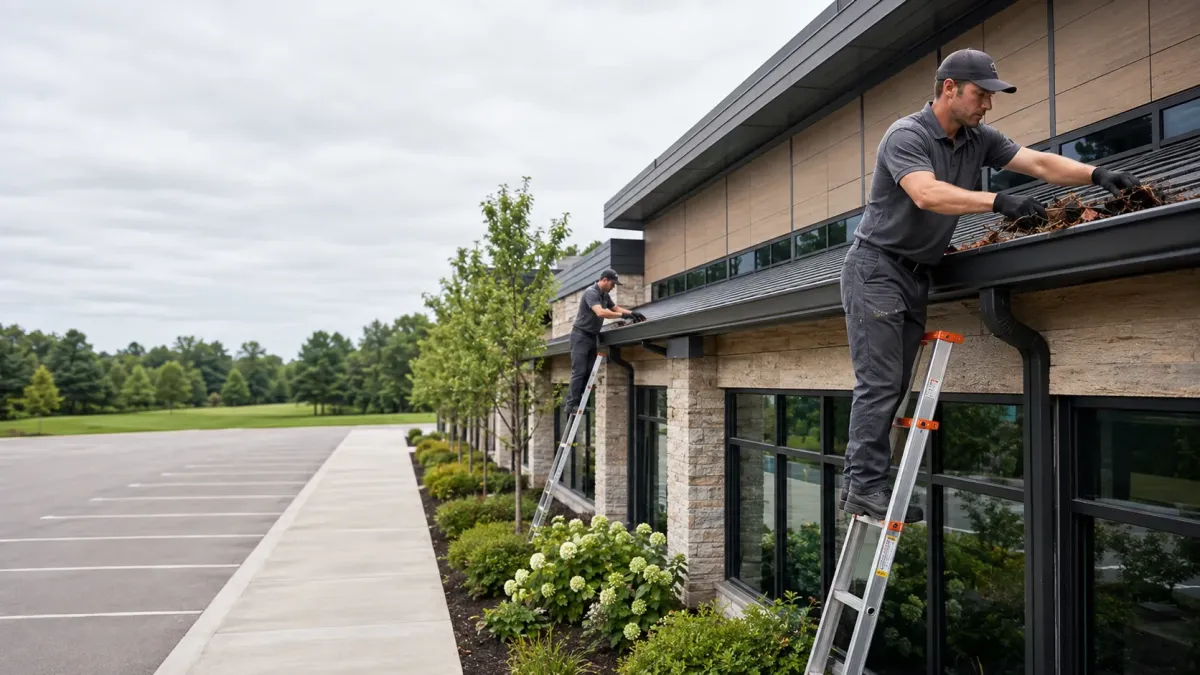
Commercial work runs on scheduled visits with documentation for the property file.
Communities We Cover Around Wyoming
Gutters, downspouts and ice dams. That is the whole list.
The ring around Wyoming is not one jurisdiction. Cutlerville answers to two townships, Jenison sits in Ottawa County entirely, and Kentwood and Grandville each run their own permit desk. We work all of them and know which door a job goes through.
Frequently Asked Questions
Gutter Services can be complex, and we’re here to provide answers to common questions. Here are some frequently asked questions from our clients.
Frequently Asked Questions about gutter cleaning wyoming mi
What is the average cost of gutter cleaning in Wyoming, MI?
There is no single figure, because cleaning is priced on linear footage, roof height and how much the downspouts have to be broken down. A single-story ranch with straight runs and two downspouts is a different job from a two-story with inside corners and buried discharge lines. We quote after we see the roofline, and the number we give is the number you pay.
How much should a gutter clean cost?
Price follows access more than anything else. Steep pitch, second-story runs, and gutters that have not been touched in three seasons all add time, and compacted debris has to be bagged rather than flushed. Ask any company whether the quote includes flushing the downspouts to the discharge point, because that is where the difference usually hides.
How much does it cost to have gutters cleaned in Michigan?
Statewide averages are close to meaningless here because West Michigan roofs carry a heavier leaf load than most of the state and the freeze cycle starts earlier. What matters is your own roof: total footage, number of stories, downspout count, and whether guards have to come off and go back on. We price the house in front of us.
What is the little known trick for cleaning gutters?
Clean the downspouts before the troughs, not after. Most homeowners scoop the gutter clean, flush it, and push the loosened debris straight into an outlet that was already partly blocked. Clearing the outlet and the discharge end first means the flush actually runs through. It is also the step that gets skipped when a crew is being paid by the house rather than the hour.
How much does gutter installation cost?
Installation is quoted on total run length, corner count, downspout count and material. Aluminum, steel and copper are three different prices for the same shape of job. The other variable most quotes leave out is fascia repair, and on Wyoming homes built in the 1950s that is a real line item rather than a rare surprise.
How much does seamless gutter cost compared to sectional?
Seamless costs more per foot and removes the joints that leak first, which is why almost every replacement here goes seamless. The material is rolled to length on site, so the price moves with run length and corner count rather than the number of sections. On a house with long straight runs the difference narrows considerably.
Frequently Asked Questions about Downspout Repair & Drain Tile Drainage
How much does downspout repair cost?
Clearing a blocked outlet or elbow is a short job. Replacing a downspout run is priced by length and elbow count. Buried drain tile is the variable that changes the picture, because excavating and replacing a collapsed underground line is a different scale of work from anything happening above ground. We find out which one you have before quoting.
Why is water pooling next to my foundation?
Usually the discharge is ending too close to the wall, or a buried line has failed and the water is backing out at the bottom elbow. Both put roof water exactly where you least want it. Extending discharge well past the foundation is the cheapest fix available and the one most often skipped on otherwise well-built systems.
How many downspouts should a gutter run have?
It depends on run length and roof area, but water travelling more than roughly forty feet along a trough to reach a single outlet will overflow in a hard rain. Long elevations generally need an outlet at each end rather than one. If a run overflows at the same corner every storm despite being clean, outlet count is the first thing to check.
Can you connect downspouts to existing drain tile?
Where the existing line is intact and carrying water, yes. The step people skip is confirming that the line still works before connecting to it, and a surprising number of buried lines in older neighborhoods no longer do. We test flow first, because tying a new downspout into a collapsed line just moves the backup to a new spot.
Fix Your Wyoming Downspouts
What Our Satisfied Clients Have to Say About
We pride ourselves on delivering great results and experiences for each client. Hear directly from home and business owners who’ve trusted us with their Gutter Services needs.
The Trusted Gutter Services Expert Near You
Ready to hear more about expert services at ?
Contact us today to receive a detailed, no-obligation quote.


